
the dry bridge

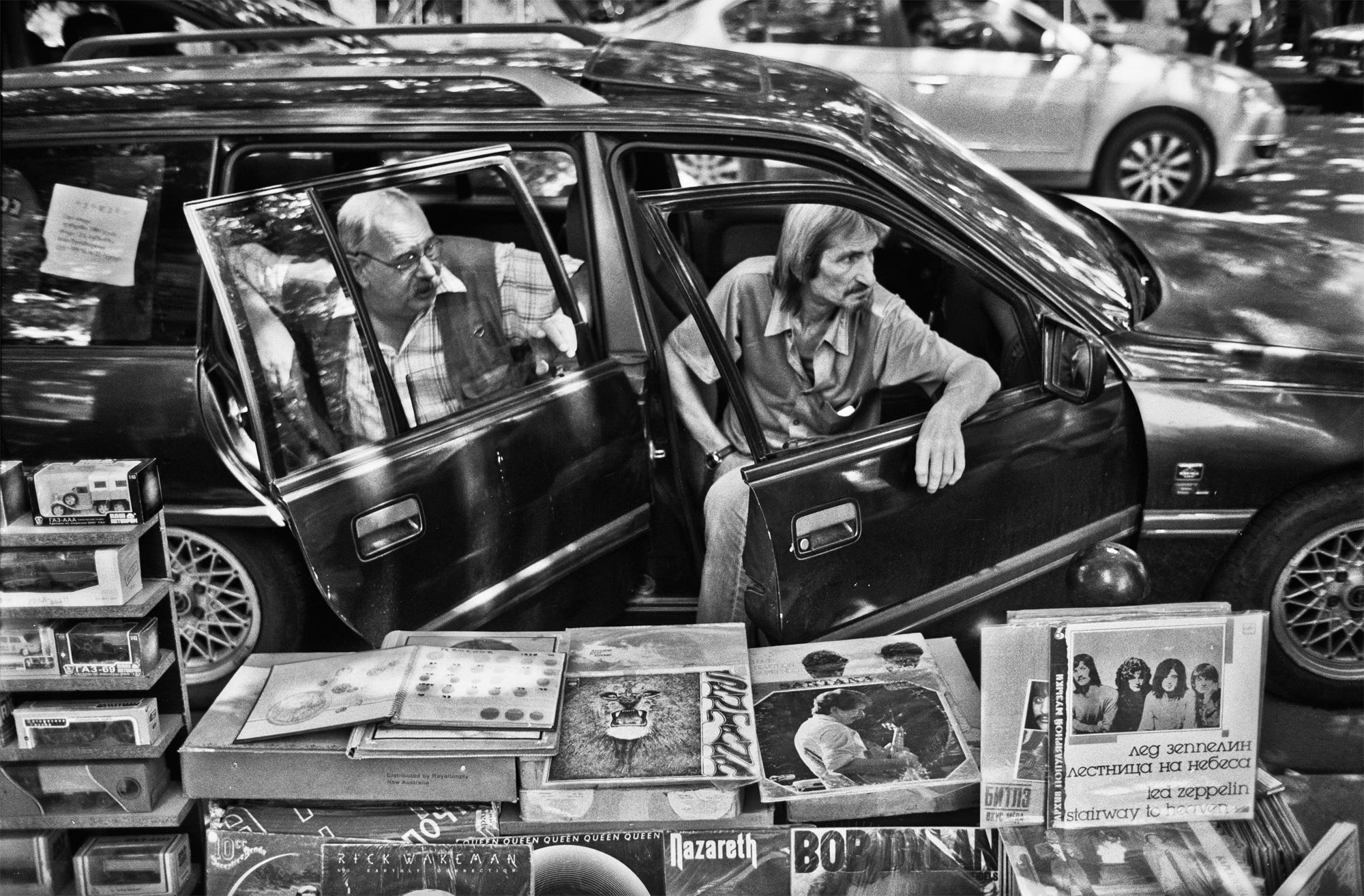
There is no escaping the allure of the dry bridge market on any given Saturday. You may not need a lampshade, or a souvenir, a tattered Soviet era comic book, or a well-polished soup spoon. This flea market is an accidental, living museum. If you ever found yourself paying admission to see some dinosaur bones in great hushed rooms, you know the invisible thread that pulls you to such places. They bring the oddest comfort in uncertain times.
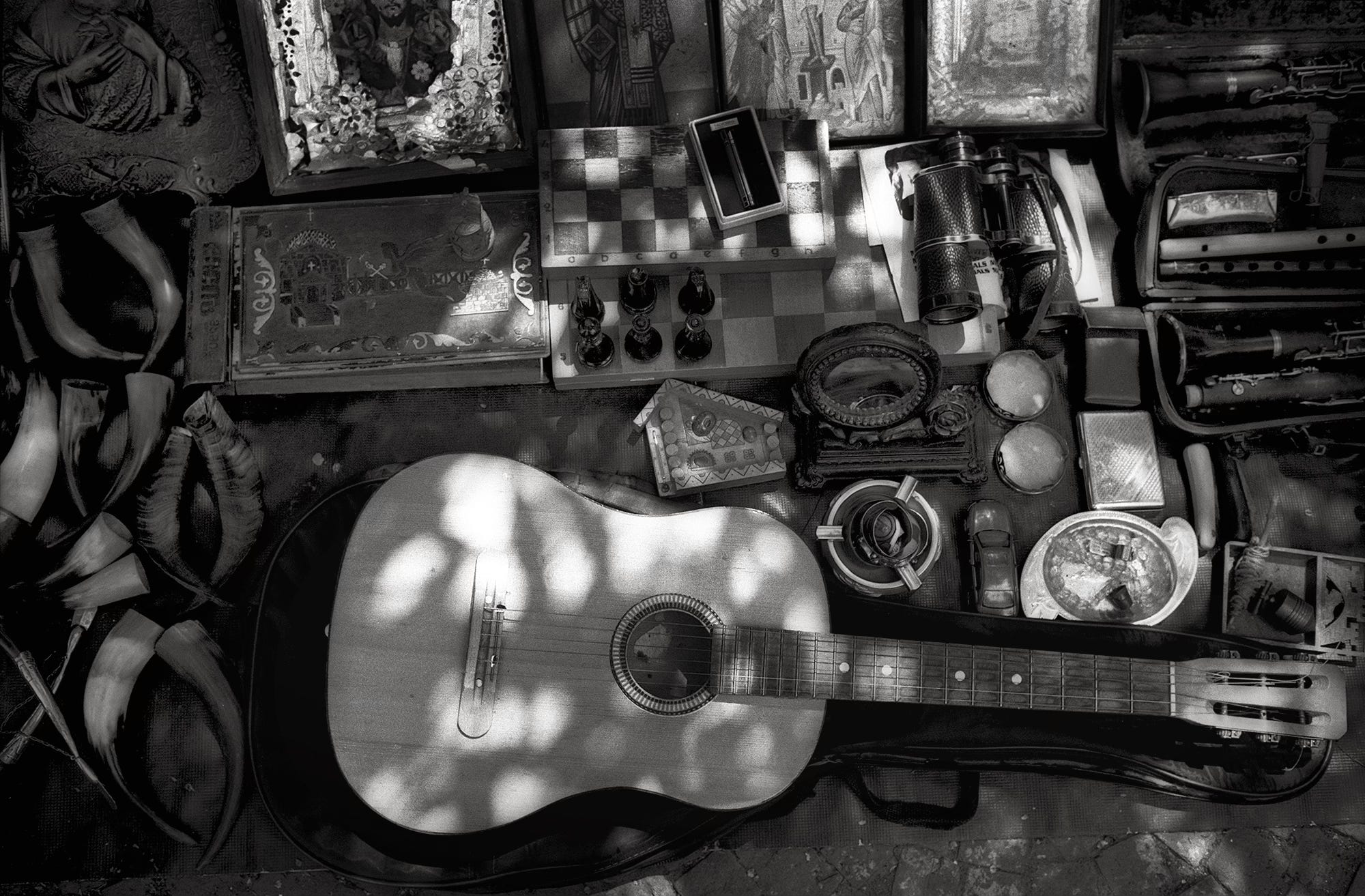
This museum is one of untold stories. Here is a guitar with missing strings, warped and disintegrating but once someone played it at a long table, surrounded by family. And here is a shelf crammed with tv remotes for screens long gone. Here are trays of surgical instruments. Here are animal bones and teeth and horns. Here are carcasses of vacuums, without tubes or wheels or bags, naked and unshy in the afternoon sun.
Some items are placed with great care across bedsheets. Crystal chandeliers stare up from the sidewalk, long plucked from a ceiling. Some items are just dumped into shoe boxes that ambitious customers root through, fingering for diamonds in those mines.
A man crouches at the corner, scratching soot and grit from some brass pot with the edge of a dull knife. It makes a terrible sound.
Of course there are tables of old cameras, all in dusty leather cases, one glass eye looking at the crowds that shuffle past, each one a Cinderella waiting for a prince and a slipper. I spy an obscure Soviet era panoramic camera, and turn it over in my hands. One in good condition sells for almost $300 on eBay. The man at the table has missing teeth. He plucks it from my hands and fires the shutter.
“Working!” He says, beaming.
“How much?” I ask.
“900 lari.” He adds.
It is the same price as eBay, no deal, no promise it truly works. Of course it was too good to be true, but all the same I am glad it is on his table, on this Saturday and maybe if I come back next week and it is gone, that will make my step a little lighter.
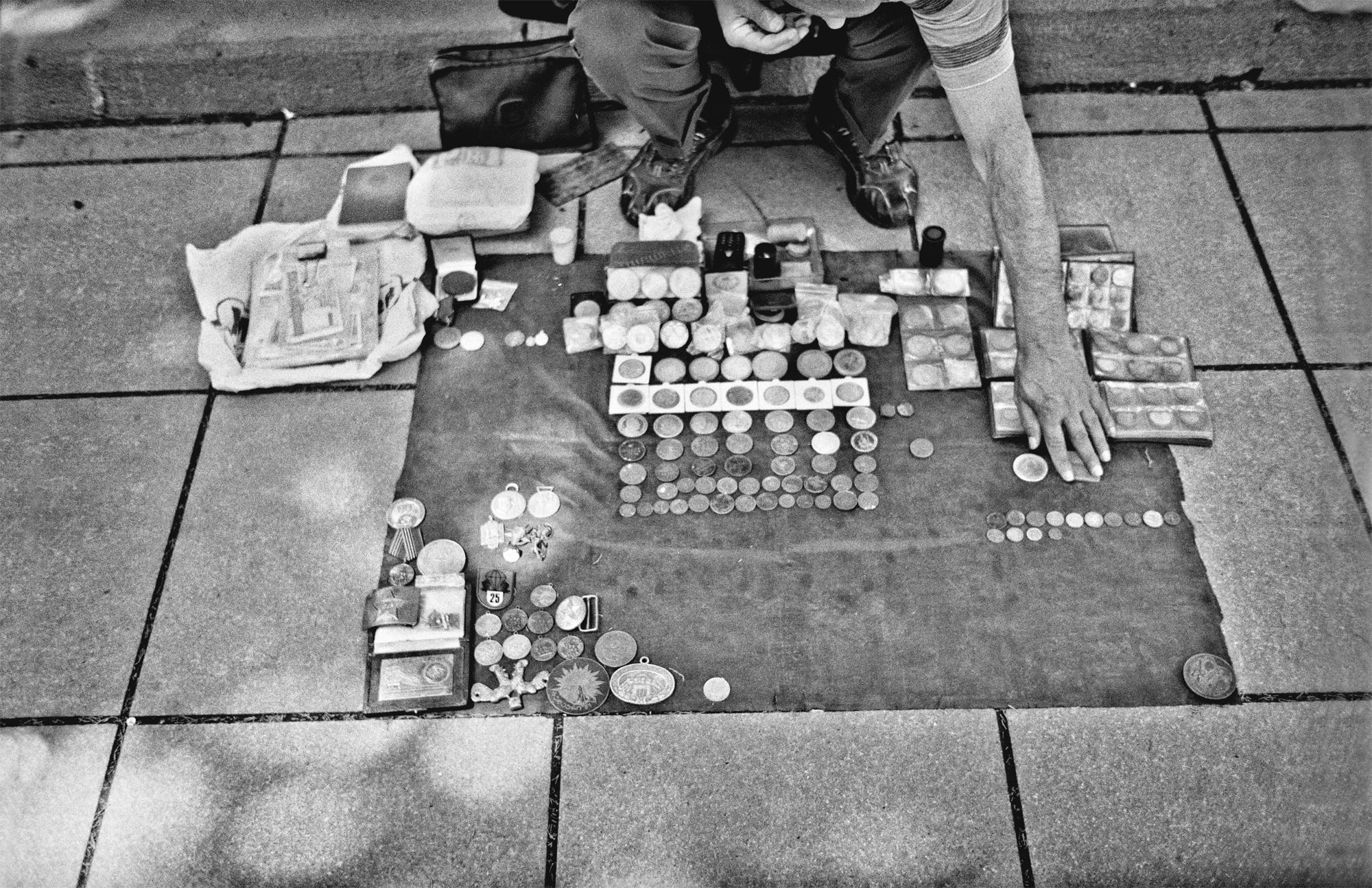
The market sprawls around corners, twists down into alleys and abandoned chunks of land, crossing streets until the ripples die down. At the very edges, it is just broken dolls and used shoes, things people tend to leave next to a garbage can on any street but here it is next to some harsh-faced person, trying to make a few pennies.
The sellers tend to be chain-smokers, ashes long, faces looking into some secret horizon, coughing deep and throaty, like each of them swallowed a truck for breakfast. They move in slow motion, as the steady stream of customers crane their necks and whisper to each other.
There are brutal objects on the tables like swords and hunting knives, jammed up next to Led Zeppelin vinyl, next to a mug that looks like a skull, next to a ceramic figurine of cupid as innocent as can be. Here are refrigerator magnets and binoculars. Here is a tarnished Christian Orthodox icon of Jesus that you can buy for less than 100 dollars. I understand the old belief - that everything in the universe is here if you look hard enough, everything your heart could desire and your soul could imagine. It is a sweet idea, that if you dig into the right box you will find something that cannot be found anywhere else. It could be a fuse for your old breaker box. It could be a plate that was a wedding gift, a piece of porcelain that broke by accident one day and now it can be replaced.
All of that magic, just waiting.
I read much lesser stuff in the New Yorker.
Hey you, Dusty, creaky and ****ing beautiful as always. Sitting here in my kitchen with its cracked plaster, greasy window sills and that cabinet door that will never close (Stealing your tone here.) You’ve got me staring at my grandmother’s oak table. And Mom (Betty Anne Malarkey - yes Malarkey) sitting at it in the 1930 in the house on Grove Street. And a century of bacon and eggs. And incomplete sentences…Thanks.